Wednesday, November 27, 2013

Homage watches and the Swiss watch industry

Look I realise that the subject of homage watches are a taboo in certain circles. And that is perfectly fine. There is no need to read on. However homages come about because there is a certain market that it appeals to. The one that loves a certain style or type of watches but simply cannot afford, for one reason or another, the asking price of the branded version. Of course we can go on and on about r&d costs and design intellectual properties and what not. But the truth is there are only really so many ways to make a watch and sooner or later even branded products will more or less overlap each other in terms of styling. Let's not go into examples where established brands blatantly copy other more established brands' style and design.

Imagine a Venn diagram. Circle on the left are Panerai owners. Circle on the right are homage owners. (We're only using Panerai as an example because of the style of watches we're looking at.) The little bit intersecting in the middle consists of people who buy homages to gauge how Panerai sized watches will sit and wear everyday on their wrist. Or if they like multiple styles they buy and try them all out then deciding on one or two and then buys them from Panerai. Then there are Those who cannot justify paying mid 4 figures for something that runs a Unitas manual wind (although Panerai is addressing this concern by fitting in-house movements gradually through its product range. ) So ultimately these watches aren't really depriving anyone of any income. 

One thing that really stood out and impressed me was the quality of the straps. First impressions are really  good. Ok so we don't know what sort of mileage you'd get from these, but to be honest if you wear a Breitling leather strap everyday it'll only last you around 18 months anyway. So it's not really a concern if a $40-50 strap only lasts me say, 6 months. 


As with everything else you do get what you paid for. The cheapest of the trio here (with the california dial) definitely show signs of cost savings. Movement is rougher (but you still get blued screws!). The case back screw holes are not aligned. The screw-in crown feels coarse however the winding is amazingly smooth. Smoother than both of the other examples, at twice the price. But apart from a few small detail issues there isn't much else wrong with the watch and for the price, well, there's really no comparison. For someone whose wallet is empty most of the time this is quite possibly one of the very few ways to get into a pretty darn good quality stainless steel mechanical watch. 


The other two examples as I mentioned jumps up considerable in price. Everyone draws their line somewhere for how much they are willing to pay for a homage. For me the price for these two better examples are pretty close to where I would draw the line. But in terms of bang for your buck, these are still extremely photos value. Case quality rivals known brands costing ten times as much and the movement is nothing to sneeze at. Strap quality is top notch (per first impression) an they look the part. For the average joe on the street they'll pass the "glance" test and are dead ringers of their more expensive and authentic counterparts. 


And this is where the dilemma begins. If finances allows, of course the original branded version would be purchased. Without a doubt. However, given the quality of these watches are the original brands doing enough to justify their pricing? Sure Swiss made and marketing and other various higher costing labour are involved but are we, the consumer, getting what we're paying for? Oh but it's a luxury item. It's a want, not a need and if you have the cash to splash these are not the questions you'd ask. But coming from an enthusiast's point of view, the answer is not as clear cut. 


Mr Hayek's long term vision was spot on (although many will disagree) when he proposed to vastly reduce the supply of movements everyone and anyone who wants them. He wanted brands to make their own movements. To protect the Swiss-ness of the Swiss watch industry. To offer something that differentiates from all the other watch producing countries out there. To show that there is still a reason to pay a premium for. That had worked to a certain extent. You can no longer get homage watches with Swiss movements for a low price. And the ones that are fitted with a genuine Swiss movement are priced such that you can easily get a proper Swiss watch for. Asian movement clones aren't quite on the same level just yet. Then there are many brands which have taken this opportunity to create something of their own, offering something distinctively different and at the same time moving upmarket to protect their margins. 

It's a shame that Mr Hayek isn't around to see the fruits of his vision. Swiss watch industry had become complacent. Charging too much for too little. Back in the 70s it was the Japanese that stirred things up with new technology in time keeping. In the 21st century it's the Chinese who did what they do best. Copy and paste at a much lower price whilst keeping most of the quality. Let's really hope that the Swiss have reacted quickly enough this time 'round and will avoid the crisis that was known as 'quartz'. 

Tuesday, November 19, 2013

Quick Look: Heuer Camaro

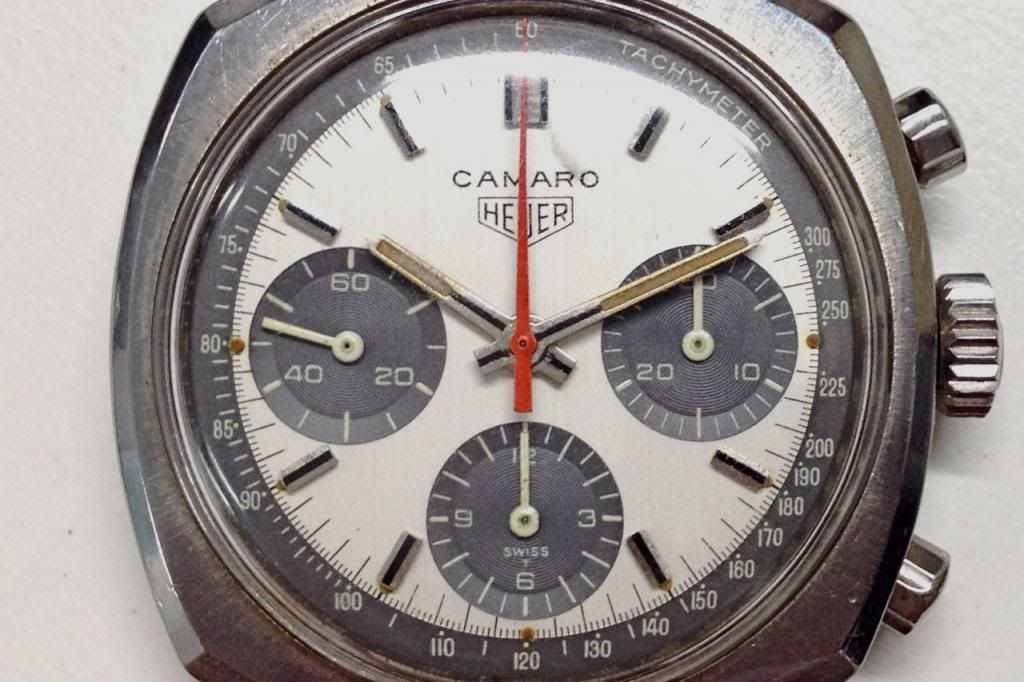
Recently I had the opportunity to have a close look at a rare gem- the Heuer Camaro. Up until now I've never seen one in person and having handled one now, it is much smaller than I thought. You can never tell the size from images on the Internet. This example even had what looks like the original strap fitted with the original buckle. Apparently it was never serviced either but it was still running. Seemingly relatively on time. 


The Camaro is powered by the venerable Valjoux manual wind chronograph movements and it's quite refreshing to know that these older movements were built tough if not pretty and designed to last. Of course the owner of the watch hasn't worn it in years which may have contributed to the great condition of the watch. It's unfortunate that the Camaro had a very short production run, phased out in 1971/72, having been introduced in 1968.

In the beginning they were fitted with Valjoux 72, but later on various 'newer' version s were fitted, including 92, 7730, 7733 and 7734. This latter movement is the same as the one fitted to the "poor man's Heuer, the LeJour chrono, seen here and here. The valjoux handwind movements were all very robust and reliable albeit not very pretty to look at, but this was before the modern see-through case back craze, so I guess that didn't really matter. The movements will all have signed "Heuer" on the bridge. 

Jack Heuer was the driving force behind the design and production of the Camaro, and the name was an excellent fit for a chronograph back then, as it was around the mid 60s that a new trend of "Muscle cars" hit the US car industry. The idea behind these Muscle cars were to fit massive engines into smallish cars, and to say the Ford Mustang was successful would be to say that the moon landing was no big deal. Chevrolet reacted very quickly, came up with the Camaro, and this model was also extremely popular. Wonder why Heuer didn't name the chronograph Mustang?


As Tag Heuer focuses on advancements in high accuracy mechanical timekeeping, it would be so great if they can divert a little attention to their history and the vast range of brilliant chronographs they have in the vault and offer re-editions. They've done it in the past with models such as the silverstone and the autavia. The Monaco and Carrera seems to be the only historically based model in continued production. You COULD argue that the Monza is a modern day tribute to the Camaro, given the similar cushion case shapes, but it's not really the same, is it? The Camaro is a beauty that deserves to be more widely recognized and that it is just one of many Heuers which, for the time being, regretfully consigned to the archives...

SPECS

Case size: 37mm x 37mm
Cushion shape with brushed finish and bevelled polished edges.
3 subdials for running seconds, 30min and 12 hour counters. Steel hour and minute hands with lum inserts, red centre chronograph seconds hand.
Movement: 17-Jewel Valjoux 72 manual wind movement. (I'm guess here, since I didn't open the case up)

Monday, November 11, 2013

Interview with Jordy Cobelens, CEO of TW Steel

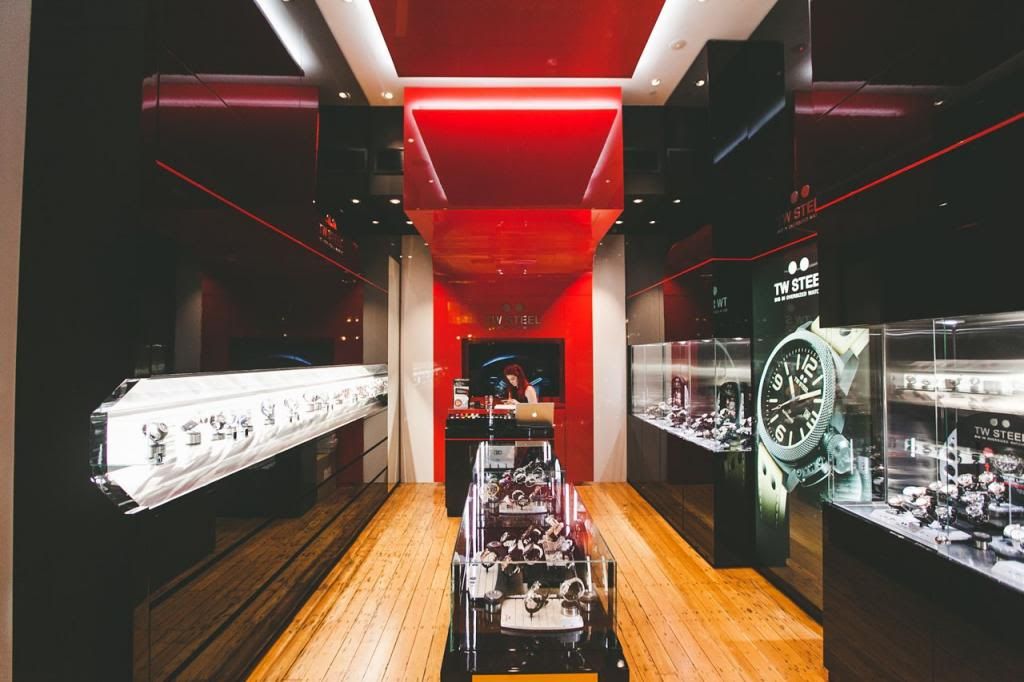
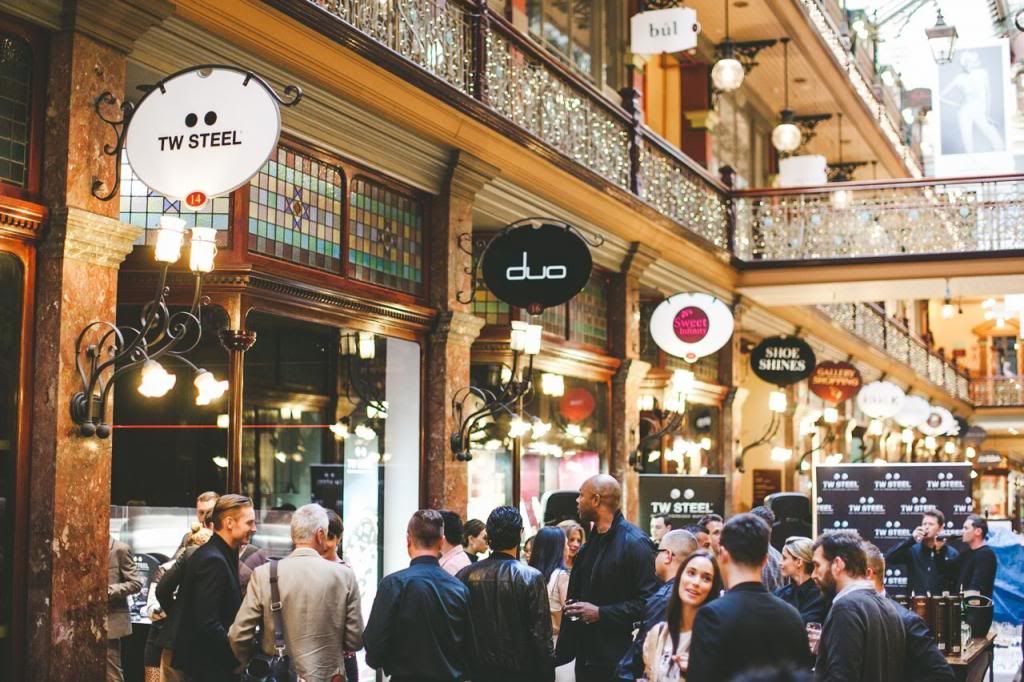
TW Steel opened its first Australian boutique in the Strand Arcade, Sydney in late October and we caught up with Jordy Cobelens, CEO of TW Watches at the launch.

The first TW Steel boutique in Australia- inside the Strand Arcade, Sydney

The Sydney Tarts: Is this your first trip down under?

Jordy Cobelens:  “No, I’ve visited Australia many times.  I’m usually here on business at least a couple of times a year.  We have a regional HQ in Sydney as we manage the territory directly so we put a lot of focus into the region which means regular visits!”

TST: TW Steel has had extraordinary growth and recognition in such a short time. We all know it is extremely difficult to build a brand from scratch. What would you say are some of the contributing key factors?

JC:  “Key factors in our success can easily be attributed to offering an affordable, yet extremely stylish and appealing timepiece. There’s no doubt we stood out when we first launched but we’ve stood the test of time also and evolved our collections and continued to grow our brand. The biggest challenge in starting a brand from scratch is that you really have no history, no credibility. You have to go out and sell your product and that takes a lot of hard work. We started off selling a product but the happy by-product of that is that we then created the TW Steel brand – and that’s something that consumers can really relate to now as they know we’re about making bold statements and being ‘Big in Oversized Watches.”

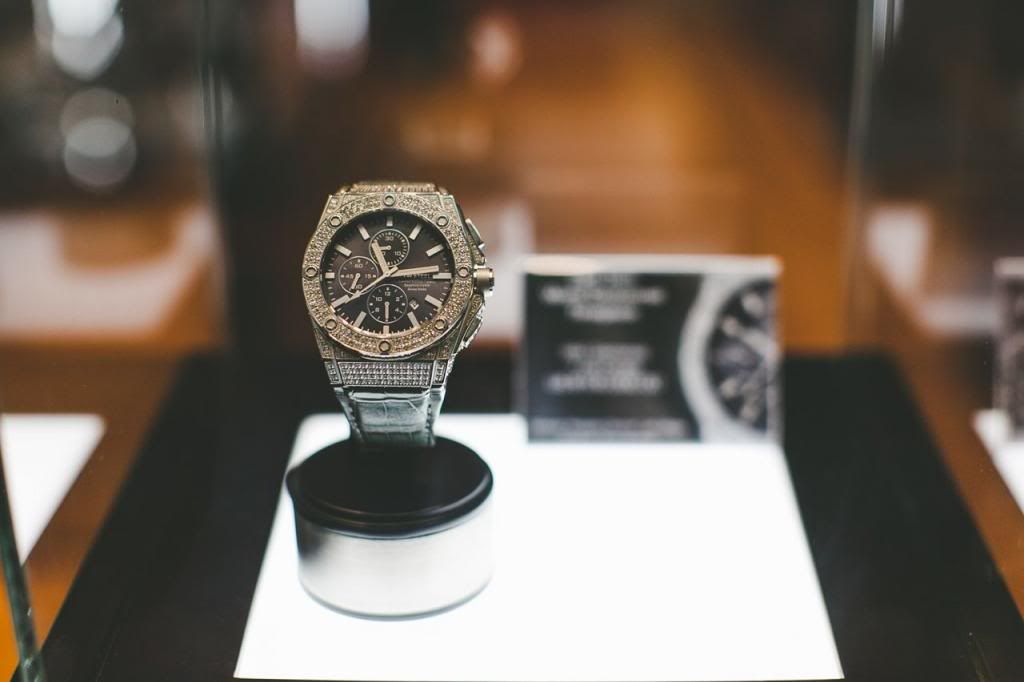
The CEO Tech World Centennial- a piece unique created to celebrate TW Steel's presence in 100 countries. Featuring over 400 diamonds and powered by Valjoux 7750 movement. It's yours for the lowest possible 6 figures.

TST: This is a tough question but it must be asked – some TW Steel watches can be said to mimic the style of other brands with a longer history. What are your thoughts on this?

JC:  “I think you’re simply referring to the fact that we’ve sometimes taken existing watch styles and tailored them for the oversized market, therefore offering an innovative and fresh take on classic watch designs.”

TST: It’s true that there are only so many ways to design a watch so overlaps in styles are bound to happen. However, is the direction going forward to create something more uniquely TW Steel?

JC:  “ I believe all our watches are uniquely TW Steel so I don’t think that’s something we have to spend too much time on. We’re always looking to create new concepts while evolving our most successful collections to keep them appealing. We have some dynamic new pieces coming out in 2014 that will present to consumers another twist on oversized watches so we’re excited to see those launch.”

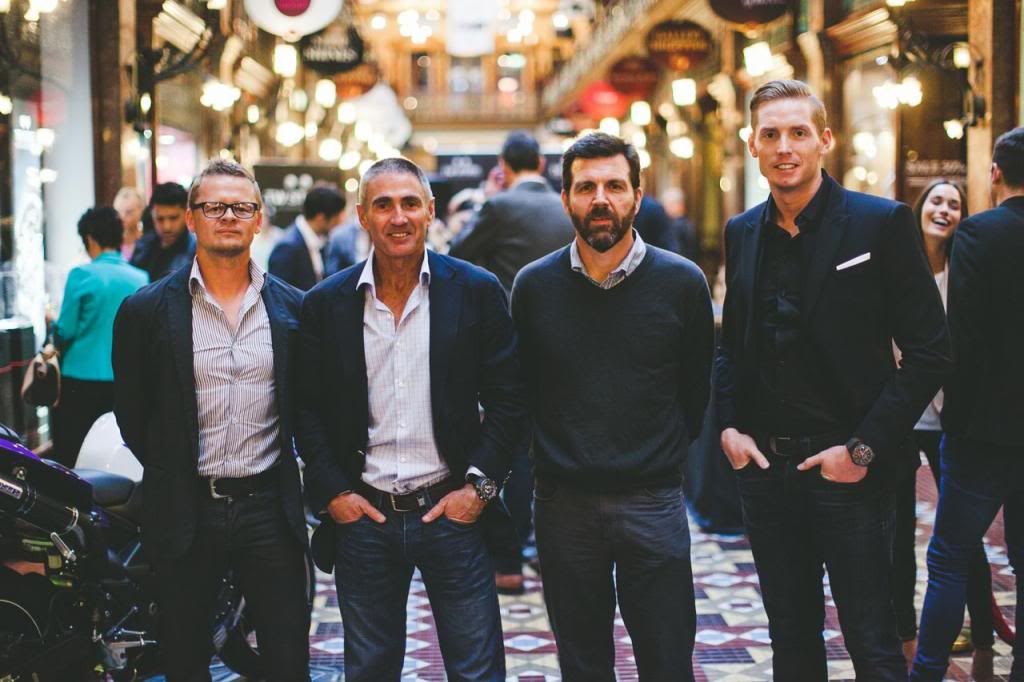
From right: Jordy Cobelens, Dougal Smith, Mick Doohan and Cameron Moses 

TST: The brand is all about being big in size. However, should watch sizes trend towards smaller diameters, will you move with the times and downsize or do you see 45-50mm sizes staying on?

JC:  “I get asked this question so many times.  My answer remains the same. There have always been small watches. They never go out of style. Oversized watches have also proved to be mainstays with many brands offering particular sizes as part of their collections.  Our DNA is in oversized, we simply saw a gap in the market for offering affordable, yet luxurious and appealing oversized pieces. We do adapt ourselves to market needs while holding true to our design values and we’ve introduced a 40mm Canteen bracelet collection and the likes of a slimmer case Pilot.”

TST: Why would someone choose TW Steel over a similarly priced Seiko or Citizen watch? Or even something from the fashion houses, say Kenneth Cole or Hugo Boss?

JC:  “They would buy a TW Steel because they’d want to make a statement with their timepiece, it’s as much about their lifestyle as it is their need for a watch. A TW Steel gets you noticed! They would also appreciate that for their money they’re purchasing a timepiece that reflects exceptional styling and build quality.


TST: Any plans on introducing customization on the TW Steel range?

JC:  “There are no immediate plans but at a more basic level we do have an impressive range of straps that can be switched out to change the look and feel of certain models within the collection. We know, for example, this design trend has been strong in Australia so we take note and make sure we keep the market happy.”

TST: Where do you see TW Steel in 10 years time?

JC:  “I believe we’ll be firmly part of the established watch brands, and no longer the up-and-coming brand. That said, we’ll continue to do things our way and not be afraid to take chances and to stand out. You’ll also see a lot more TW Steel boutique stores, that process has already started and the next few years will see further investment globally to cement our brand footprint. We’re building a lifestyle brand and that’s a truly exciting process. Included in that is the tie between TW Steel and my other company, Steel Entertainment Group, a leading DJ event and artist management company, and the official entertainment arm of TW Steel.”

(All images provided by TW Steel Australia)

Monday, October 28, 2013

Are Watches A Good Investment?


This is a question often asked not just by watch collectors and connoisseurs but also by pretty much anyone who is buying or have bought or considering buying an expensive watch. Believe it or not the recurrence of this subject is more often than you'd think and quite frankly, just like everything else that require opinions, everyone has different ones. As a person who appreciates watches along with other finer things in life I'll try to offer a subjective view on this. I'll also draw comparison between a few other items that people can seemingly invest in but aren't your conventional stocks, shares or real estate.

So, let's get down to business. We are talking about investment, meaning we are expecting some form of positive return, rather than say lease, where you pay a smaller amount of money for the usage of an item for a specific time frame, or quite simply dumping your hard earned cash down the drain. Most of the time when we buy something it ends up being the last point - money down the drain.

In the sneaker game the companies are all too aware of the hype, so they cash in on it by limiting supplies. Due to the relatively lower barriers of entry there are more and more people investing in sneakers, and quite simply, also because the demand is there i.e. there are enough people willing to pay way above retail just to get a pair of sneakers.

Don't laugh. Things aren't all that different with watches. Plus there is also the matter of ego. For example, to be the first on the block with the latest and flashiest, or the rarest. Plenty of people with more sense than money.

Ah the vanity. Some will pay stupid money just to be the first to own something. Or just to have it earlier than everyone else.

What makes a good investment? I suppose a good investment is when you get back more than what you put in. A ‘safe’ investment, but a boring one is to stick your money in the bank and you’re guaranteed a return over time. Right now? You’d be lucky to get 5% return per annum. That means if you put $100 in the bank, you get $105 back after one year, provided you don’t spend it. 5% is nothing, really. Perhaps you’d like to ‘enjoy’ the investment while waiting for it to appreciate? I suppose watches come into this category.

Ideally, this is what happens. You buy a watch. You enjoy it for a while. After you get bored with it, you sell it off at a profit. You make some money whilst having enjoyed the usage of your investment. There aren’t many things that could command more money the older they are. Houses and wine are two quick examples that come to mind. However, in real life, watches behave much more like cars, in that they lose a huge chunk of their value the moment you drive it out of the dealership, or in the case of watches, strap it onto your wrist.

So watches aren’t good investments then? Yes and no. It depends on a number of factors: hype, supply and demand, price, timing, scarcity (ie vintage pieces, unique pieces) and a bit of luck. You also need to completely take emotions out of the equation. You can’t buy a watch for investment simply because you love it. No. That’s a big no no. Watches that are good investments may not be the watch you like, but has to be the watch that will bring you the biggest financial return. Good if you happen to also like it but that’s not a prerequisite. If you can get all the factors working in tandem for your benefit, that's when you rake in the profits.


Let's break down each of the factors in detail and see how they influence the ROI.

Hype - The more hype there is about a certain product, the more possible demand there is for it. Over in the sneaker game, there are people known as Hypebeasts, who, as the name suggests, prey on products that are ‘hyped’, buy in bulk, and hope to then resell at a huge mark up. Hype also drives people into a frenzy, when the purchase is no longer a rational decision, but becomes a "must-have" heart decision. This in turn leads into the next factor -

Supply and demand - This simplest of all economic models is also the one that works best (in my very un-economic mind). When demand is greater than supply, the price moves up until an equilibrium is reached. However, the less supply of something also causes more people to want it, simply because it is rare and more 'collectable'. This also causes people to start using "quan xi" or "connects" to try and jump the queue or to guarantee that they'll get the product. This leads to -

Price - When something is so hyped up that just getting the product is already difficult due to supply and demand, price doesn't even come into the equation. There are other times when the old adage "buy low sell high" works, but when hype is in overdrive, no one cares about the price as long as you can get it. This of course, then leads into -

Timing - Let's say you were able to get your hands on that all-elusive product and demand is sky high due to the hype, when do you sell? How do you know you're getting the biggest possible return on your rare commodity? Do you flip it straight away and capitalise on the hype and frenzy as most people will probably be doing? Or, do you buy and hold and wait until there are fewer of these items on the open market available, before selling, as the secondary market supply dries up? This is when you need a bit of luck.

Scarcity – Well, if it is a vintage piece, tracking one down might be a bit of an issue already. Perhaps finding one in serviceable condition? If you do find one and it costs more than the watch itself to bring it back to good condition, do you still want it? A unique piece also doesn’t guarantee you immediate ROI. What if it’s a unique piece because there is only ONE person in the world who actually wants it?

People will tell you that watch brands like Patek Phillipe, Rolex and Panerai are great investments. But are they really? Are you looking for a positive return on your investment or are you happy to get say, 60% of your original spend back? Another question will be – how long are you willing to wait. Granted some, and the emphasis is on SOME, models from a particular brand can command higher than retail at the secondary market, but this depends on whether you can get a piece in the first place and the timing – when you flip it for a profit. It’s a fine balance that is not easy to get right.

Believe it or not Rolex WILL depreciate straight away. You won’t get your money back on a new Rolex. You need to be patient. But then you also need to factor in inflation, servicing costs, etc. and not just a plain number – as in” I bought this watch for $300 30 years ago and now it’s worth $1000. I’ve made $700!!”

What about vintage Rolexes, you ask? Sure, but again, only certain models are desirable, and then there’s the provenance. The more you can prove the more the watch will be worth. Condition of the watch also comes into play, and most important of all, you need to have done your homework. You need to able to tell the most subtle differences between model years and replacement dials/ fake dials/ re-dials, etc.

You’d be amazed at the wealth of information and misinformation on just one particular model. Then there’s the price you’re willing to pay. With so much variation in the quality and age of the watches, what is a reasonable amount? I’m not saying that it’s hard – just that it’s wise to invest some energy into researching your investment. As you would with shares and real estate. Eh?

You can of course, also speculate. This is the high risk/ high reward section of investment. How do you speculate on watches? The same way you do with stocks. It can also help if you have the means to manipulate the market that you’re speculating in. For example, you can control the supply and demand of a certain model, and therefore price, (assuming there is a demand) by reducing the supply. Or you can take the long term approach, by betting that certain unpopular models now will become highly sought after in a few decades, so you buy and hold and hope and pray. It’s happened before so why wouldn’t it happen again?

You need to be really good at reading the market, keep track of what all the influential people are saying, on the various forums at the very least, and to keep a close eye on all the forums that has a sales sub forum - this is one of the best places to find out the market value of certain pieces. I would avoid auction houses such as Antiquorum or Christies, unless you have an 80 year old stainless steel Patek perpetual calendar. But then again, if you have one of those what the heck are you reading this post for? The reason to avoid the auction houses as their prices tend to be overinflated to due various reasons and are not a true indication of a watch's worth.

Brands such as Rolex have a very established second hand market value, and there are various trends and price tracking services. This is extremely prevalent in Japan, where they will track the price of a certain model over time. This does make it easier to determine the value of a piece and whether it will make good investment or not. This is almost like your 'blue chip' investment. As long as you buy the right product at the right price.

There are riskier investments and these are the brands that does not have an established trend. This is where your research comes in. Whatever you do, investment is a brain exercise rather than an emotional one. If you let emotions take over - this is the downward spiral that can and will happen. You get emotional about a product because it got hyped up, with low supply and high demand. You lose all rationale and pay too much for it just to get it. Once you get it you get buyer's remorse, but then the hype died down, supply in the market increased from buyer remorse sell off and the price goes down. You end up getting stuck with something you only liked at the time and now can't get rid of, or you take a big hit and sell at a loss...

Keep in mind that the context of this entry is purely on the notion of investment and is not taking into consideration that you buy a watch because you like it, etc etc. That’s a completely different topic. This entry also only deals with individuals thinking about investing in watches. Putting watches into self-funded superannuation scheme might work but I feel most of what is mentioned is still relevant to this. International managed watch investment funds are something else entirely therefore we won’t deal with the here.

Disclaimer: BY no mean is this article sound investment advice. This is purely one person's point of view, and before you embark on investment please consult your investment advisor. We take no responsibility for the accuracy of the article.

Saturday, October 26, 2013

On The Wrist: TW Steel Cool Black Colour Red

As you probably all know, marketing doesn't come cheap. Building a brand up from nothing, now... I shudder to think what that would cost. And the cost is not only associated with dollar signs. It's also time, effort, manpower... it's a lot of things. Which is why it's all the more astonishing what TW Steel has managed to do with such a short space of time. How short, you ask? It's less than 10 years. There are older watch brands that does not have as much brand recognition and reach. Their watches are now available in over 100 countries and around 5000 points of sales. Those figures are darn impressive.

All that money must come from somewhere right? So they must be ripping everyone off with their watches, you say. Surprisingly, no. TW Steel watches are quite reasonably priced, with most of their range of watches in the low to mid 3 figures. And they're not skimping on quality either. Watches are made from 316L stainless steel and movement wise you're looking at either Japanese Miyota movements or Swiss Ronda movements. What they don't tell you is where the watches are made. And apart from their "Swiss Made" range, there's no prizes for guessing which country might be producing their watches.

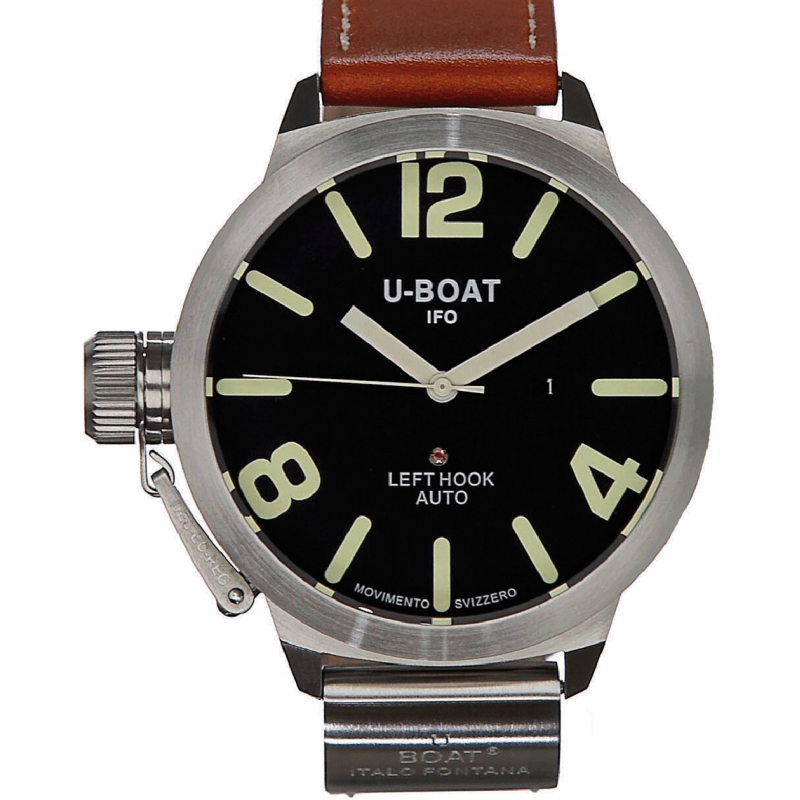
Of course, the finger pointers will then point to the derivative style and accuse them of copying U-Boat, which produces overpriced (to some) canteen-style watches. But then again, perhaps they also, need to be accused of copying canteen-style watches from back in WWII? And besides, the canteen style is only one of the lines of watches TW Steel produces. Granted they're not breaking any new ground in design, but you have to admit that across their range of oversized watches they have taken on an identity of their own.

The design inspiration? U-Boat has the crown on the left so it doesn't dig into your wrist if you wear the watch on your left wrist...

Personally I feel that TW Steel has been very smart in making their marketing budget work smarter. One of which was picking up (presumably) cheap advertising space on the Renault Formula 1 cars after some unpleasantness with the team and then more recently, put their stickers on the Force India team (who also presumably were having a fire sale on their ad space since they need money). I think a good part of their success comes down to how well they have marketed the brand, and really pushed the brand into the general (hip) public's consciousness. If someone ever writes a book on TW Steel's rise to prominence, I want a copy.

Well, enough about the company. How about them watches, really? Well, they're known for their oversized watches and they are true to their words. What's normally a men's size is relegated to their women's range, and if you don't have the cohones (or the wrist) you'll most likely find it quite difficult to pull off wearing their watches. I really liked one of their tonneau shaped watches (looks like the result of a Richard Mille/AP Royal Oak Offshore Chrono... ahem.. rendez-vous)  but even with its curved back it just felt much too big, and no, I did not have the cohones to pull that one off. However, a 50mm round canteen style watch I could do, and this is the watch we're looking at today.

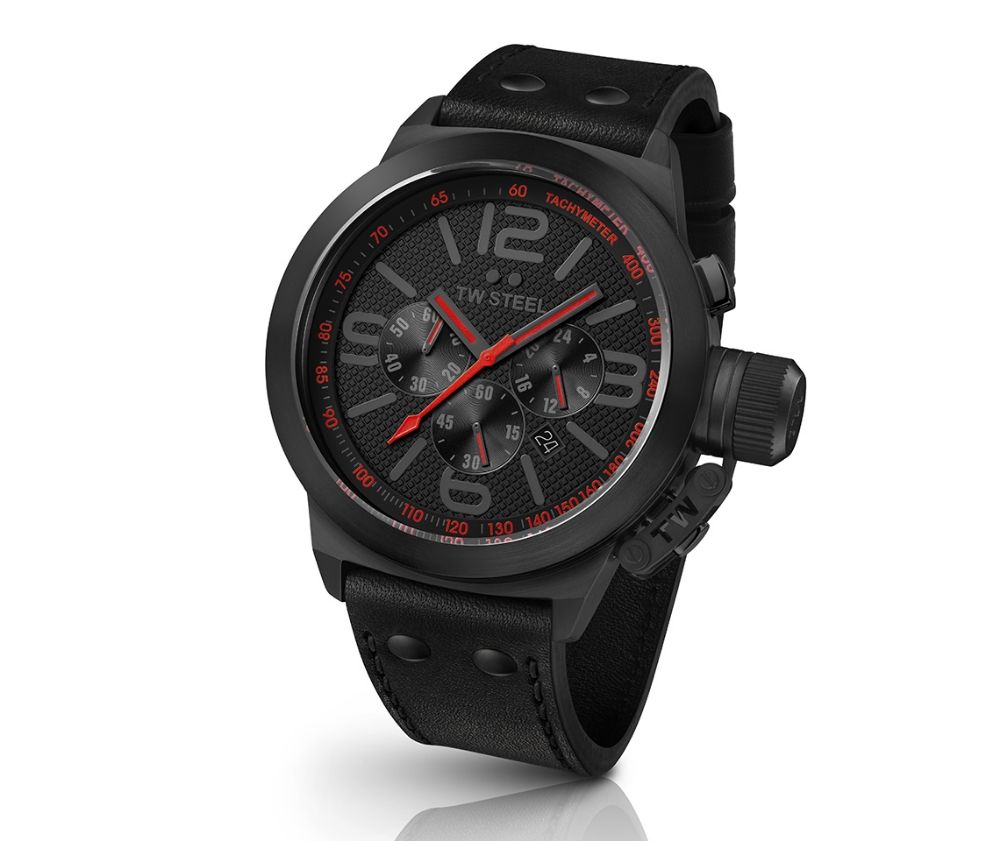
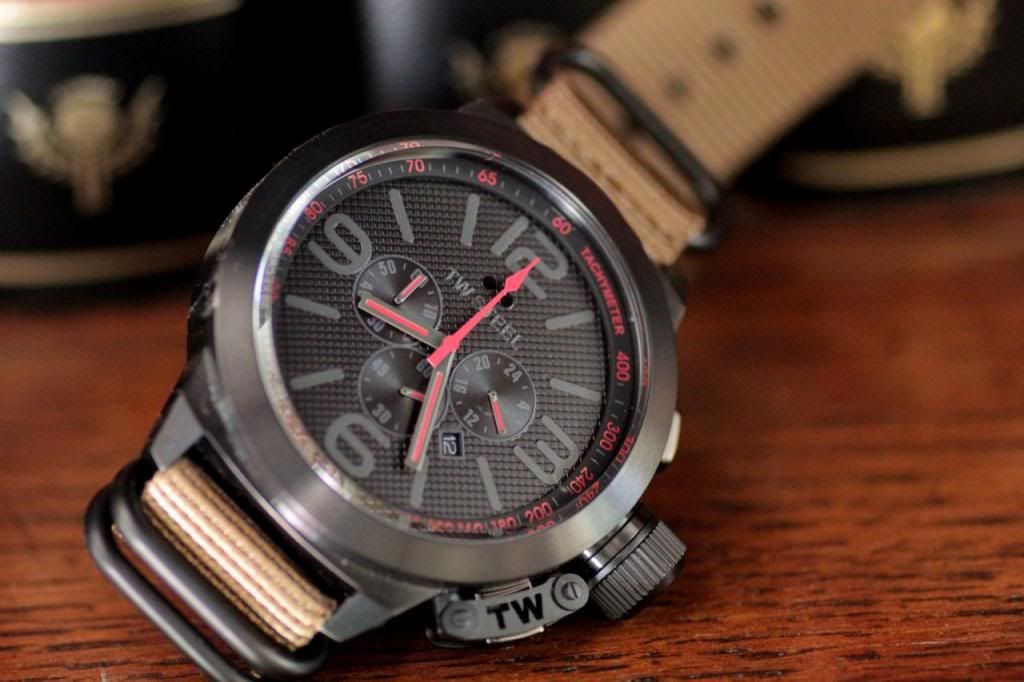
TW Steel Cool Black Colours - Red 50mm diametre

First, the negative. The massive crown kinda intrudes into the wrist (unless you're wearing this watch on the right wrist) and for your troubles, you get a tiny little crown with which to change the time and date. (That massive thing is just a cover. The actual crown is really, really tiny.) Good thing it's a quartz movement. I cannot imagine winding this thing up every day with that thing. This is only an issue with the Canteen line of watches. The rest of the range has a proper sized crown. The movement is also very small (well... the case is very big) so you have all the subdials of the chronograph kind of bunched in the middle. But the way the dial is designed, it's nicely balanced enough that you could forgive this little trespass.


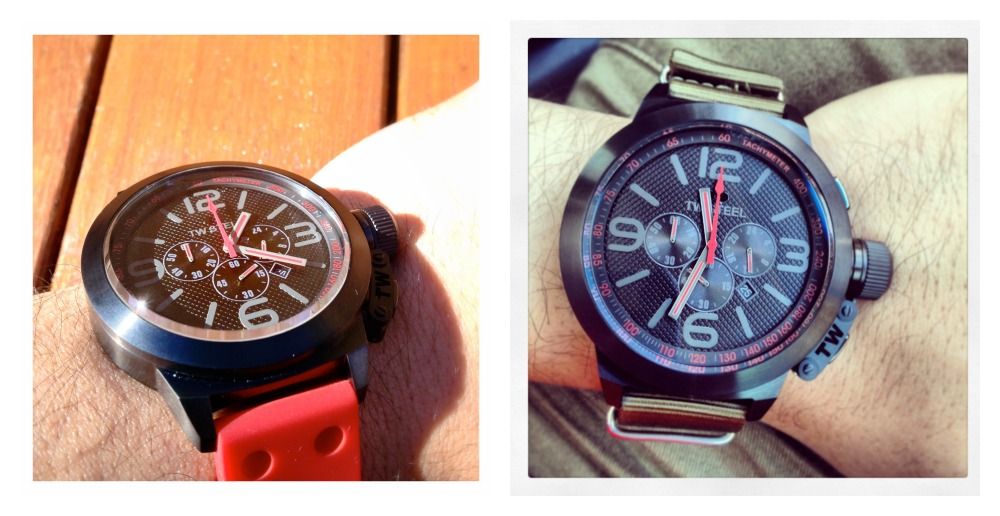
Other than that, the case has a nice heft and feels like quality. All the markings on the subdials are symmetrical, and the dates disc is thankfully the same colour as the dial. The black leather strap it comes on is soft and comfortable on the wrist, but I'd opted for a NATO style strap just to give it a slightly different look. The watch did come with a spare colour matched red silicon strap, but it looked... let's just say it does the watch no favours. The movement in this watch is a Miyota chronograph OS20, which is accurate and robust enough. And should anything go wrong, they're also cheap enough to replace, so no issues there. Case is in 316L stainless steel and water resistant to 100m.

I find khaki coloured zulu strap with black PVD rings goes best with this watch

For the price, you do get literally a lot of watch for your money. It's a big, hefty piece and it's certainly not for everyone. But if you like the look and like big watches you could do a lot worse than a hockey puck of a watch on your wrist from the brand that's big in oversized watches.

Saturday, October 19, 2013

On The Wrist: Panerai PAM 106 Luminor Submersible

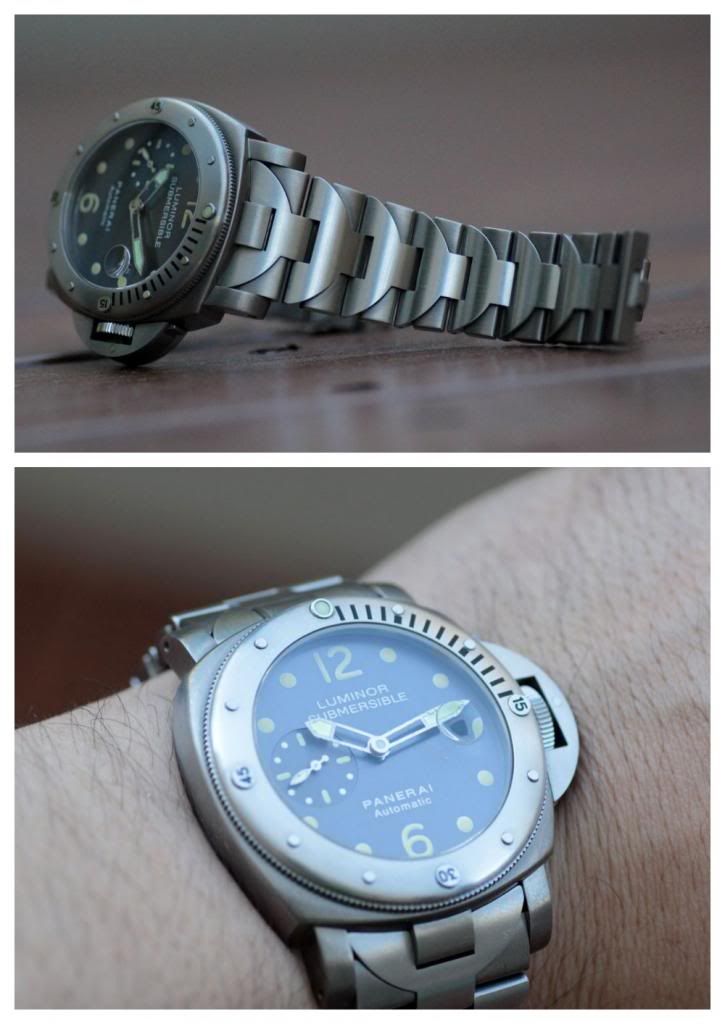
It's not everyday we come across this piece - the PAM106, which just might be one of the more elusive regular models in the Panerai range (as in, it wasn't designated a special edition). Why is it elusive? Officially, only 1000 pieces were ever made over two years, in 2002 and 2003 (D and E series). It appears to be the first Submersible to receive the bracelet, and it is also the series to receive the updated bezel with ratchet at one minute intervals, and minute indices between 12 and 3. The PAM106 also features a bi-metal case and bracelet. The case itself is in titanium with a stainless steel bezel, and the bracelet is a mix of brushed steel and titanium, making this watch quite subdued and low key. Another interesting facet about the 106 is the dial. The shade of anthracite actually changes from a light grey to almost back depending on lighting and angle.


Thanks to its stainless steel/titanium construction, the watch itself is not too heavy and not too light. It sits on the wrist just right. (Didn't mean to rhyme there). At 44mm in diameter it's not a small watch, but it's no longer the BIG watch it used to be. The bracelet tapers from the lugs to the clasp, reducing a bit of visual weight as well. What I don't understand is why Panerai produced the bracelet with only half the clasp!! I believe many of the original clasps broke quite easily and were replaced with what should have been, a proper full folding clasp. I'm guessing the owner of this particular example wears the watch more on strap than on bracelet, which might be the reason why the original half clasp appears to be quite sturdy still. Personally I'm a big fan of the older style bracelet, which was modelled upon the crown bridge. The bracelet design was simplified on newer models and I think this is a great shame, as it now just looks generic and dare I say it, cheap...


Another known issue for the Submersible models of this age is the pitting of the hands, as can be plainly seen in this example. This is a bit of a mystery as it's actually not a case of moisture getting into the watch. The hands would be the only place with signs of pitting whereas the rest of the watch is fine. Online chatter suggests that these hands were replaced under warranty, but of course, as purists go, it's better to keep everything as original as possible, right?

Now, the dial. There were two versions available. Tritium dials and super-luminova dials. Again, the tritium is more highly sought after and now shows a warm patina. It is said that D series were produced with tritium and this changed to the super-luminova in the E series. But of course, if the tritium dial was replaced during service, the replacement would be the lume version.


The PAM106 is powered by the OPIII movement, which is just Panerai speak for a valjoux 7750 minus all the chrono functions. As such it's a reliable movement and everyone can service it. And because it is a 7750, you get the signature rotor wobble if you shake the watch the right (or wrong) way.

Granted, the Submersible is not as "iconic" as either the Luminor or the Radiomir. It is a bit of a hybrid design-wise (mix of Egiziano and Luminor WITH an automatic movement). However Panerai continued with this style and it's come into its own as a strong separate model line within Panerai, and although its style might be polarising to some, you could say it's found its niche and you can always take comfort in knowing there aren't as many Submersibles out there as Luminors or Radiomirs or Fiddys... If you manage to find a PAM106 in a good condition, geddit as they'll probably become harder and harder to find. Unless, of course, you settle for the more ubiquitous Pam 24 or Pam 25...


Thanks to the owner of this lovely timepiece for offering me the opportunity to review the watch.

Saturday, October 12, 2013

Carmelo Anthony joins the league of Swiss Watch Brand Ambassador

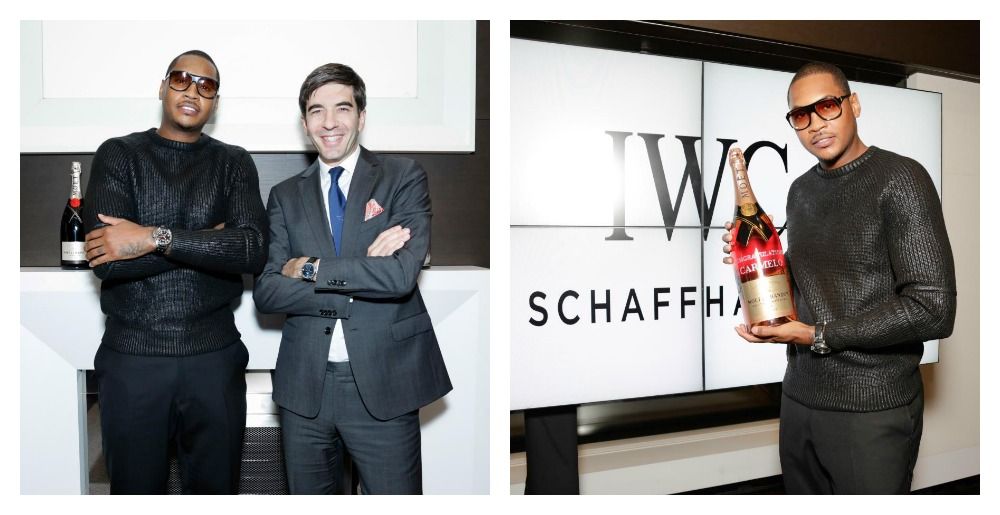
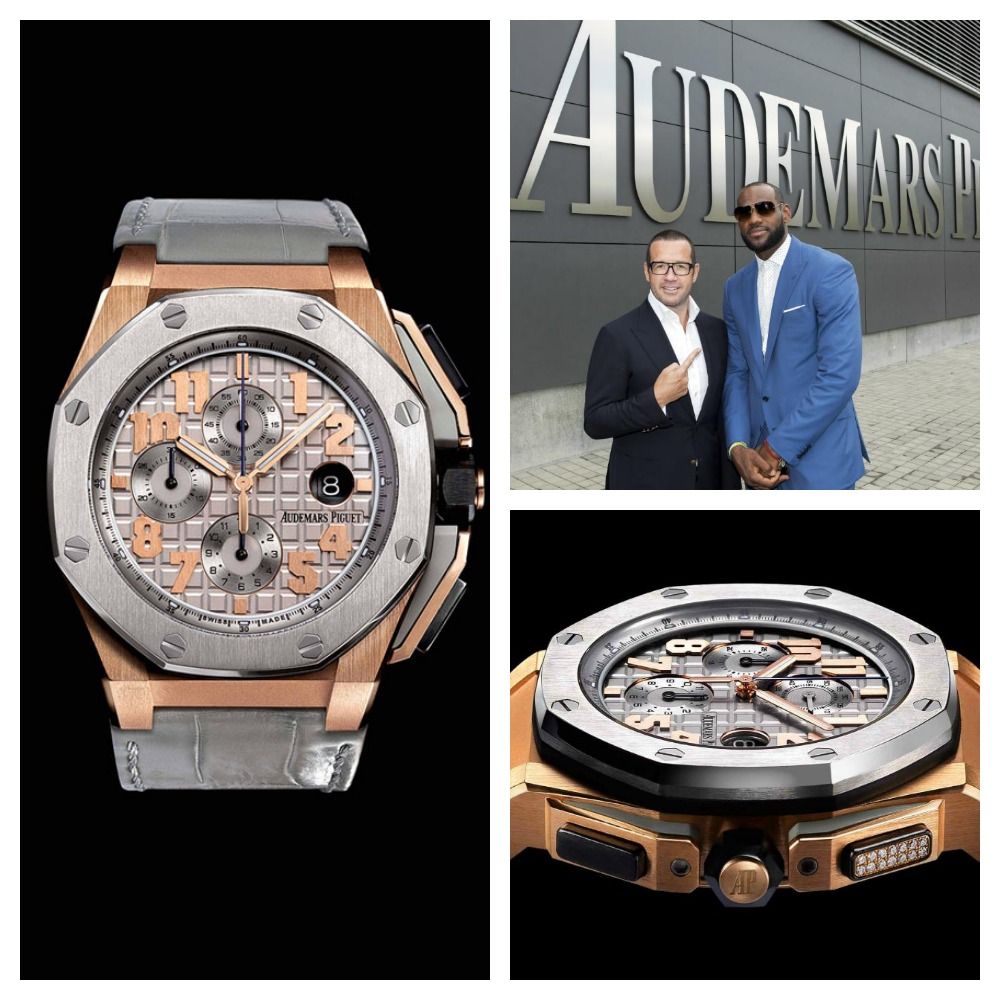
We briefly talked about NBA players and watch endorsements. Well, let us welcome the latest addition to the NBA league of Swiss Horlogerie brand ambassador/friend/connoisseur - Carmelo Anthony. The news came around the same time as AP releasing some news about their friend of the brand LeBron visting the factory at Le Brassus and the launch of the new LeBron James Limited Edition. (Although I'm sure we'll soon see the IWC Melo limited edition - maybe they can pacakge it with a pair of shoes, with the strap made from the same material as the shoes? Imagine hyperfused and flywire straps! Hmmm... Copyright on that idea! Same goes for LeBron.)

Carmelo Anthony joins IWC as a friend of the brand
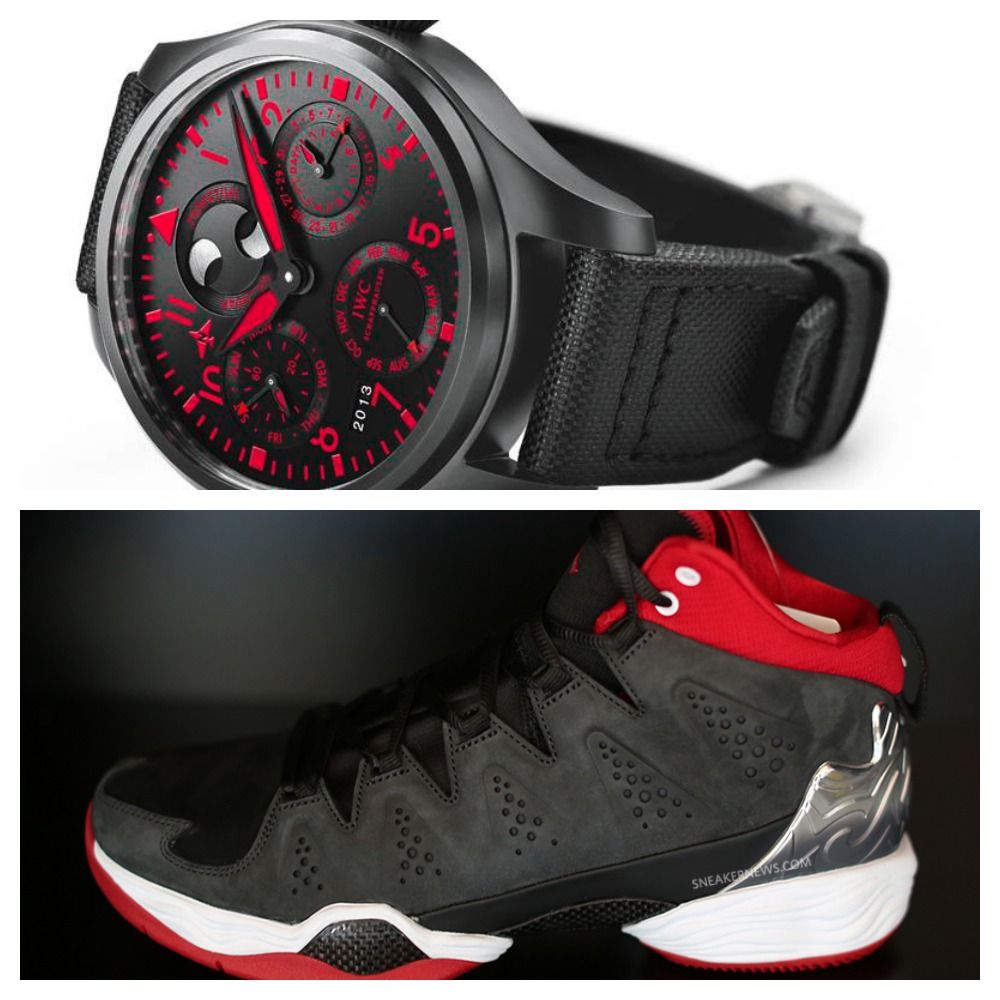
Jordan Melo M10 goes pretty well with the IWC Big Pilot Perpetual Calendar... 

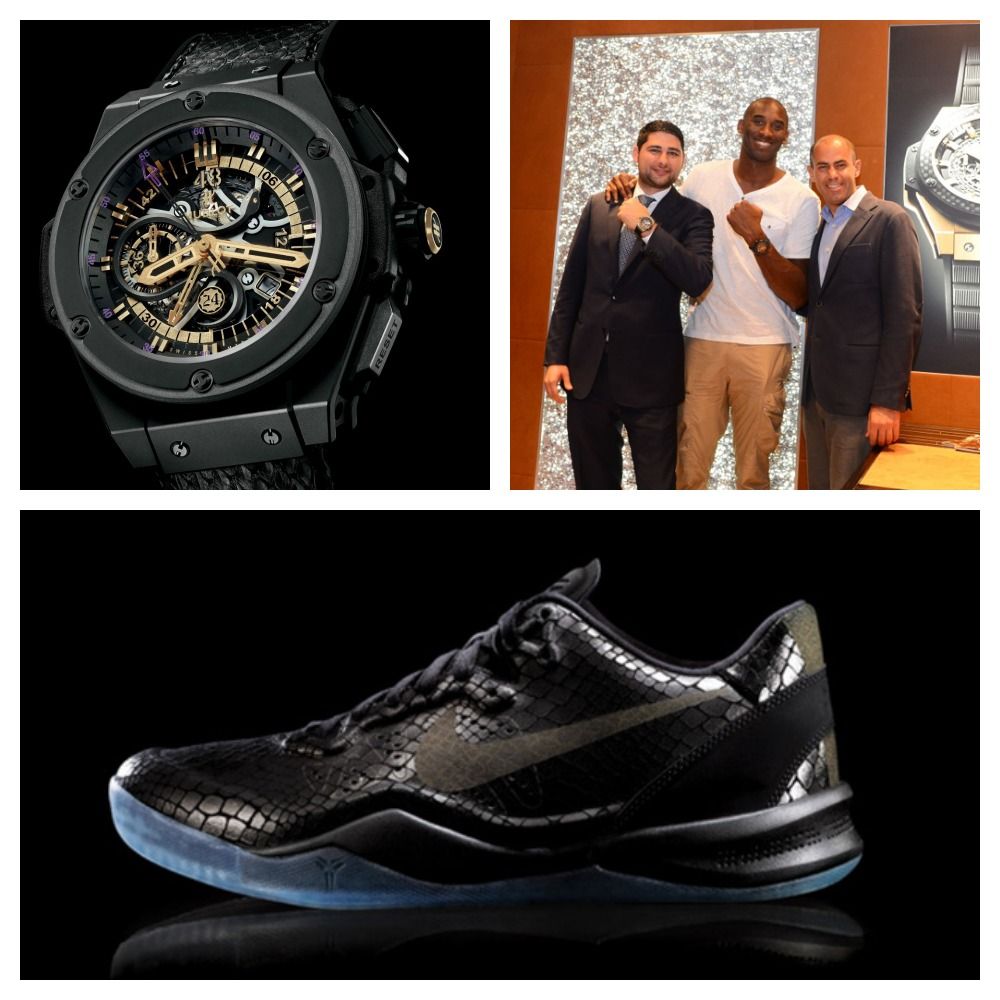
Is it a coincidence that the players getting their own watches also happen to be the ones with a signature shoe? LeBron is up to number 11 with Nike, and Carmelo up to number 10 with Jordan. (Incidentally, Hublot ambassador, the Black Mumba himself Kobe Bryant also made news recently about him presenting HIS watch to a few lucky owners in Abu Dhabi. He's up to number 9 on his shoes with Nike. Yes, only 9 generations as he was with Adidas before that)

Nike Kobe 8 Black Mumba goes perfectly with the Hublot

The AP Royal Oak Offshore Lebron Edition. Limited, no doubt.

Makes me wonder when/which Swiss watch brand will pick up CP3 as an ambassador? he's up to shoe number 7 with Jordan... Bit of a shame that high end Swiss watches wasn't in vogue when Michael Jordan was at his peak. Rose is only up to shoe number 4 but he has plenty of potential...

But going off the prices of these watches, (AP, Hublot, IWC...) I think I'll stick to the shoes...